IPAM built in
VLANs, prefixes, an allocation wizard with reachability probes, and RFC 2136, PowerDNS and Technitium DNS integration.

Cofferdam is a modern data centre platform that maps every rack, cable, IP address and watt in your facility, then keeps it in sync with the systems you already run. Structured cabling, power topology, environmental telemetry and IPAM in one place. NetBox-compatible by design.
First-class integrations with NetBox and Proxmox VE, with HPE OneView, Jira Assets, Freshservice, ServiceNow and SAP S/4HANA in beta, mean no more spreadsheet bridges between teams.
Built-in structured-cabling proposer, power topology with single-line diagrams, blade chassis bay grids, environmental telemetry with threshold alerts, and a tenant-scoped RBAC model layered over hash-chained audit logs.
Self-hosted, including on air-gapped sites, and AI-agent-ready.
Live captures from the Cofferdam demo environment, next to the problems they solve.
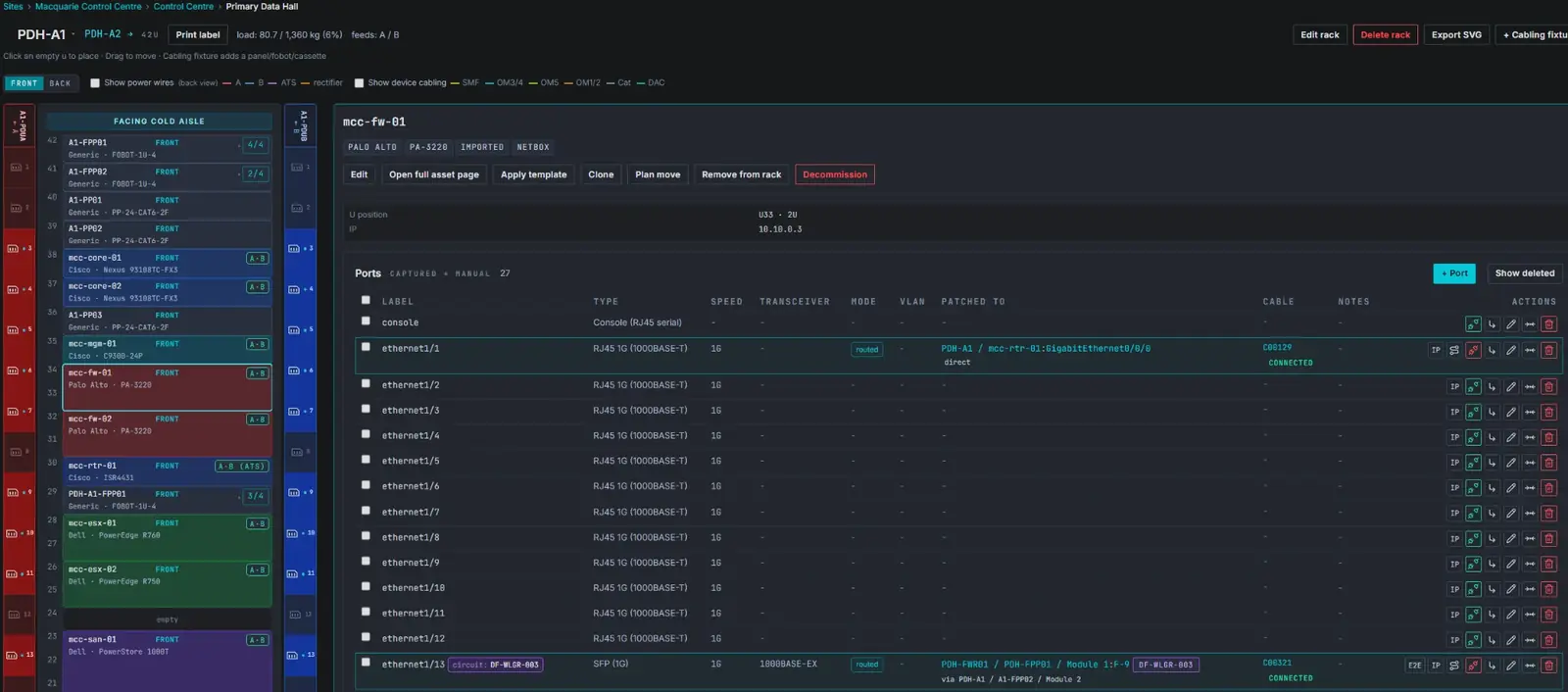
U-accurate elevations with drag-to-place assets, blade chassis bay grids, and a per-port patching table behind every device: what each port runs, where it's patched, and on which cable number.
The badges tell the story: these assets came straight in from NetBox.
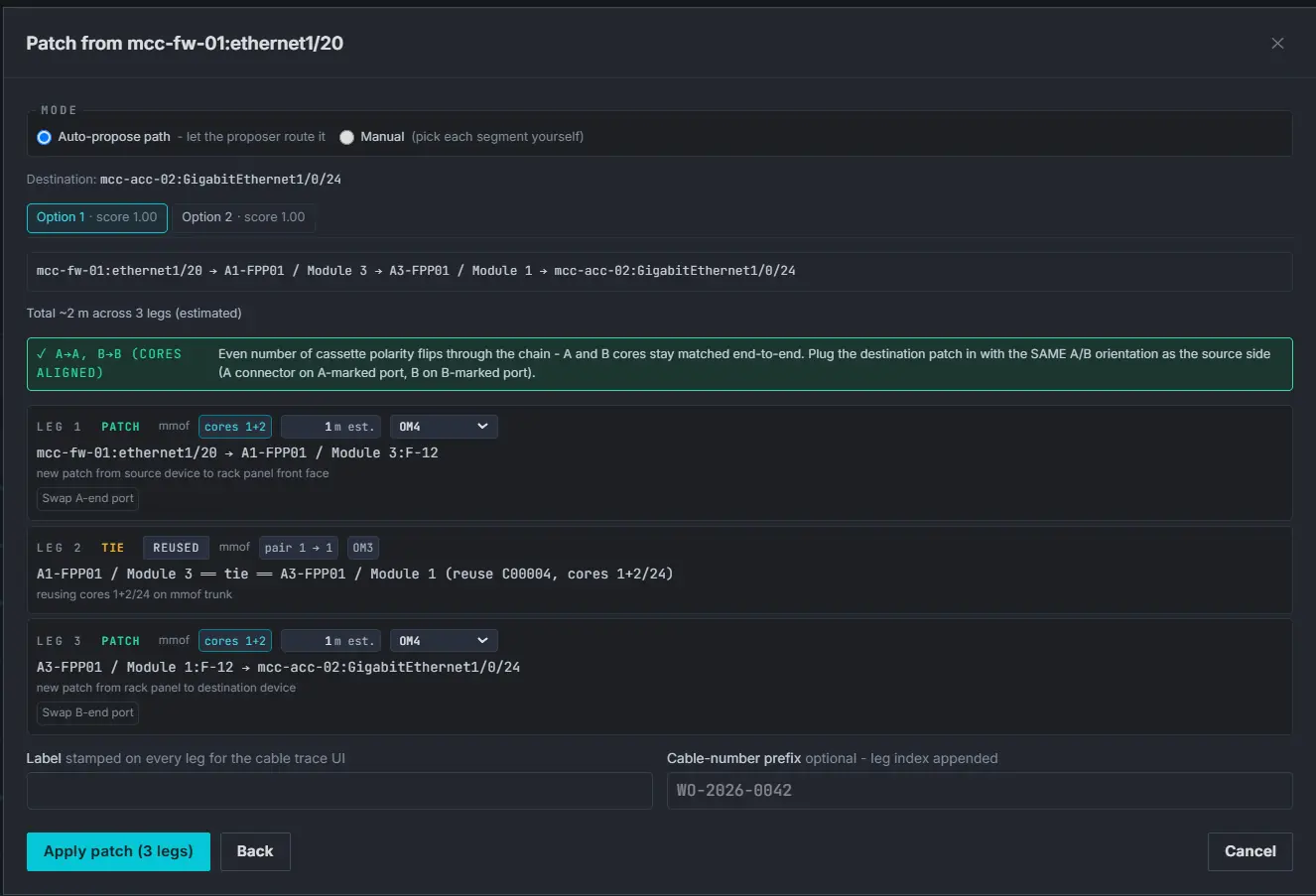
Pick two ports and the proposer routes the path: which panels, which cassettes, which cores, reusing trunk capacity where it exists. Polarity is verified end to end before anyone orders a cable.
Apply the plan and every leg lands in the cable register with a work-order label.
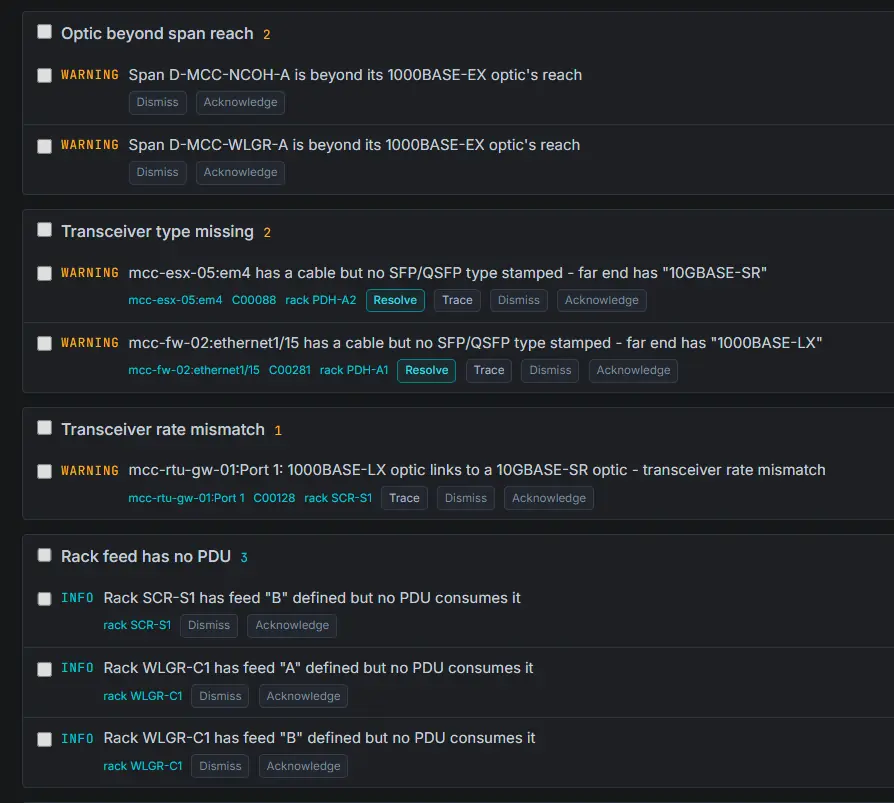
Optics running beyond their span's reach. Transceiver rate mismatches. Cables with no SFP type stamped. Rack feeds that no PDU draws from. Cofferdam flags what a spreadsheet never could, with a trace to the offending cable.
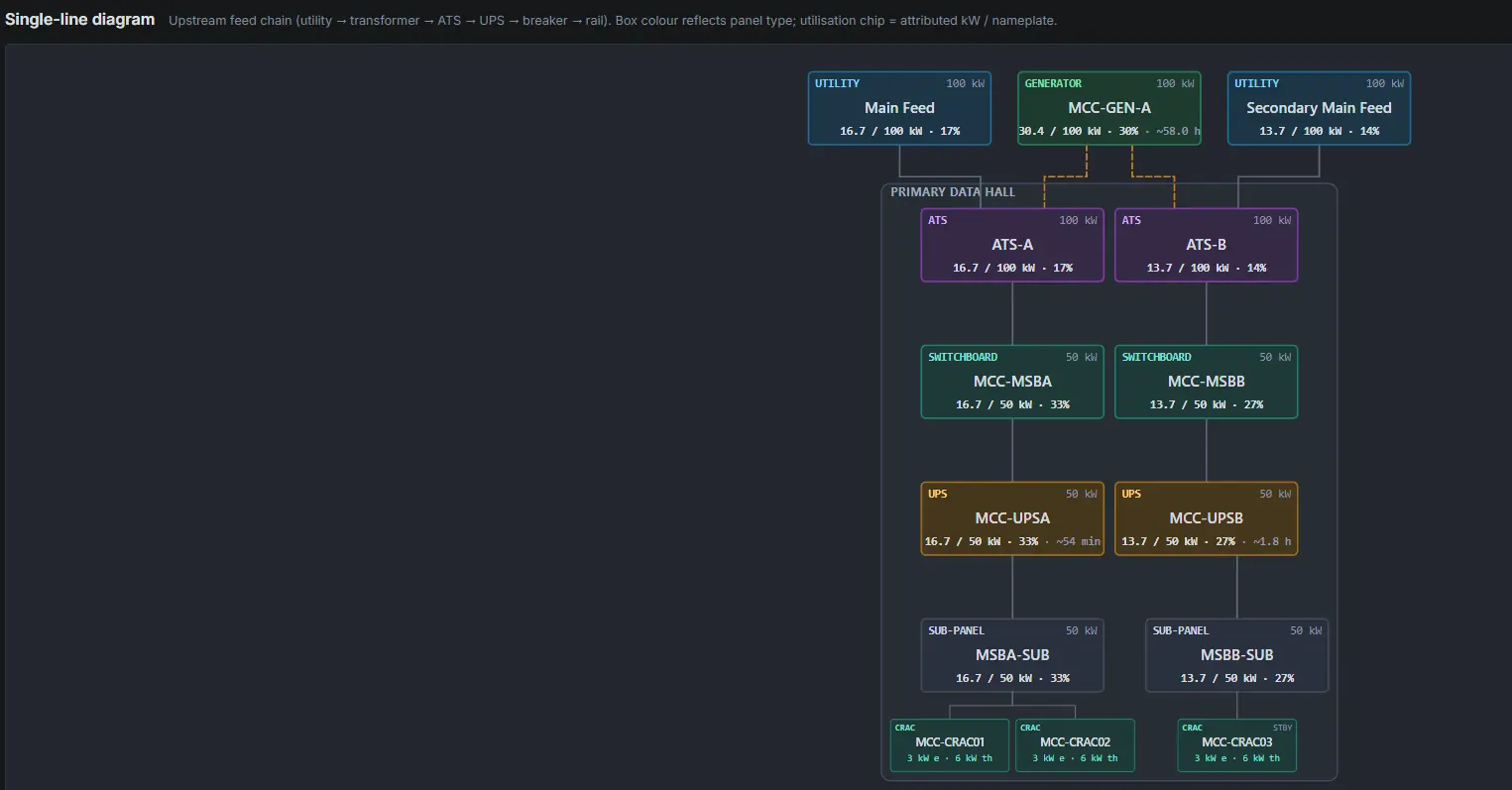
Utility to generator to ATS to UPS to sub-panel to CRAC, drawn as a live single-line diagram with attributed load and utilisation on every box, plus redundancy modes and facility-level rollup. PDU telemetry feeds the same model, with measured panel load from rack PDUs. Live UPS readings over the standard UPS-MIB are in beta; where a UPS reports its own runtime, that replaces the nameplate estimate. Recorded generator fuel levels give a runtime estimate.
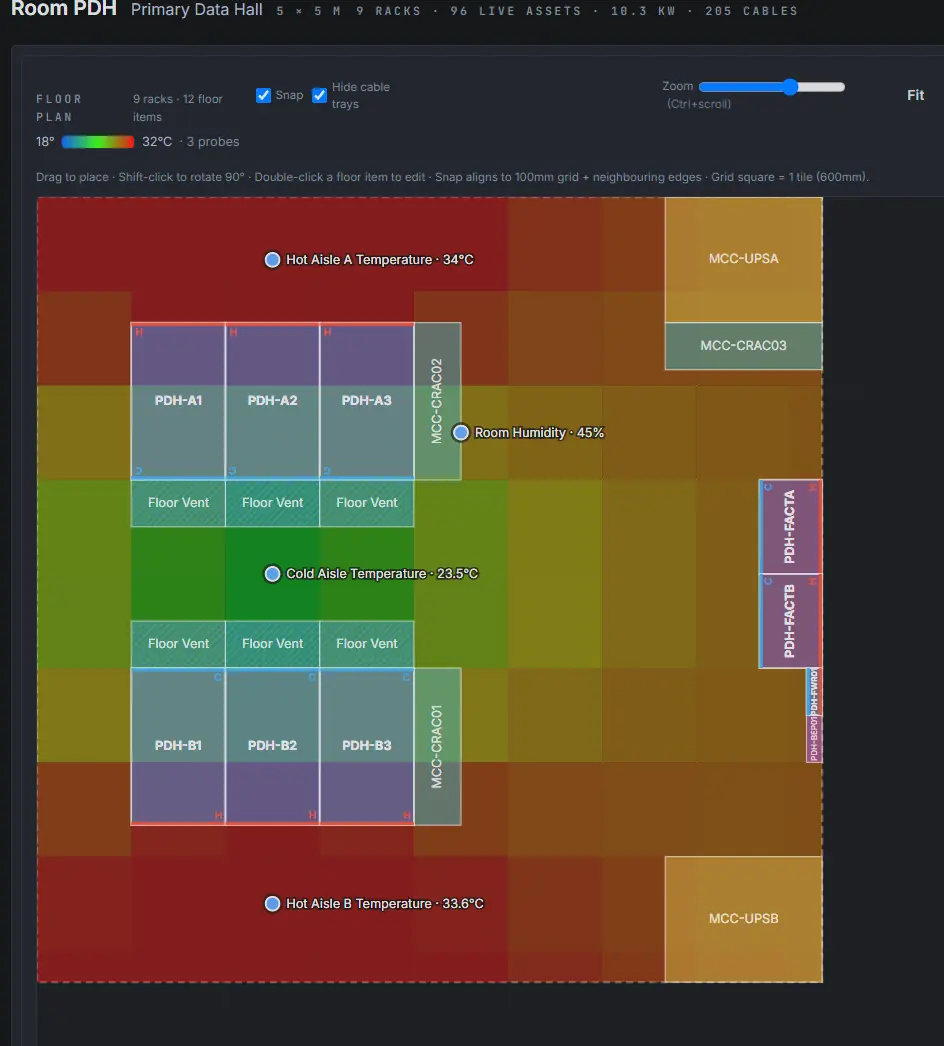
Floor plans placed to a 600 mm grid, with SNMP probes feeding a live thermal overlay across hot and cold aisles. Threshold alerts fire before the hardware complains.
This demo room survives the loss of one cooling unit (it is N+1), and Cofferdam can show you why.
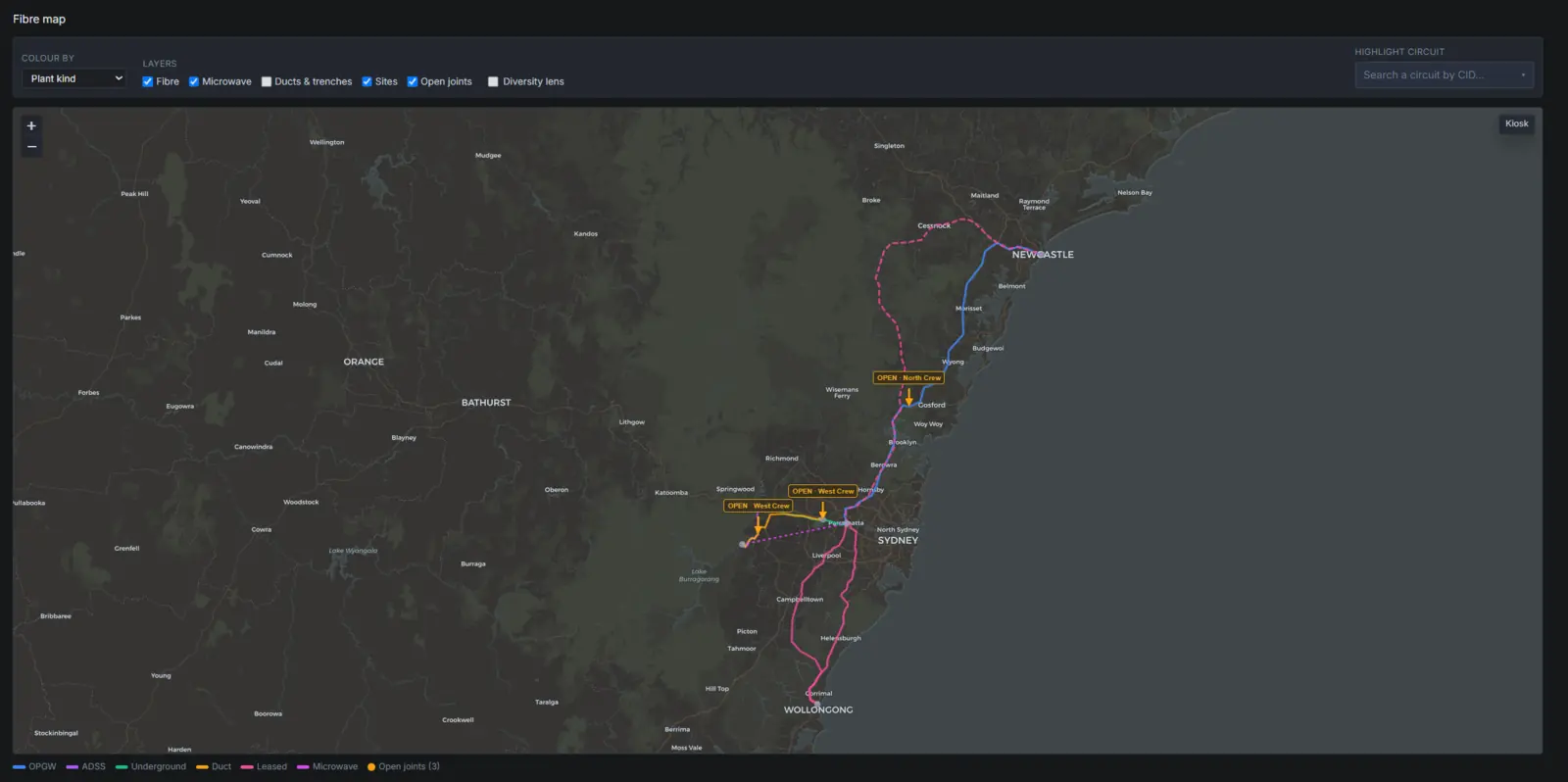
Fibre spans, ducts, microwave links and shared-risk groups on a live map, coloured by plant kind. Open joints carry crew labels, so "who is standing in which pit" is a glance, not a phone call. Fibre core and splice records, OTDR traces and imported copper cable-test results sit with the spans, strands and cables they describe.
VLANs, prefixes, an allocation wizard with reachability probes, and RFC 2136, PowerDNS and Technitium DNS integration.
NetBox and Proxmox VE, with HPE OneView, Jira Assets, Freshservice, ServiceNow and SAP S/4HANA in beta, plus a NetBox-API-compatible IPAM endpoint.
An agent proposal queue keeps automation on a leash: agents propose inventory changes, an administrator approves or rejects each one, and the audit log records every proposal and every decision. The NetBox-compatible API is the one exception, and only for a token an administrator enables for it.
OIDC single sign-on, LDAP (Active Directory) login, phishing-resistant passkeys and TOTP for multi-factor authentication, tenant-scoped RBAC and visibility, a hash-chained audit log and snapshot versioning.
Push approved configuration to Cisco IOS-XE, to Juniper and other NETCONF devices that support confirmed commit, and to Arista EOS. A change one person requests is pushed only after a second person approves it, and the device undoes it after a rollback timer, five minutes by default, unless someone keeps it; devices that cannot roll back are refused. Restoring many devices to their approved baselines can run as one bulk plan, approved by a second person and kept automatically on each device that reads back correctly.
Cofferdam labels any device whose running configuration has moved away from its approved baseline and, on devices that support write-back, restores it on request, one device or in bulk, with two-person approval.
Bring isolated OT sites into the same inventory through remote pollers, with every request signed.
Signed offline bundles keep air-gapped sites current, and connected sites can update from inside the application.
Findings from firmware vulnerability matching carry an indicative MITRE ATT&CK for ICS mapping, and threat-intelligence indicators you import can be linked to advisories for reference.
A health score for every asset, built from the inventory facts Cofferdam already holds. Room pages summarise power and cooling; site pages add asset health.
Config contexts and templates, a read-only GraphQL API and queryable jobs.
The SOCI CIRMP and AESCSF catalogues map the evidence Cofferdam holds to a selection of each framework's controls. For SOCI CIRMP, you can also record an accepted risk for equipment past vendor end of support, with a review date after which it lapses. You can write your own compliance policies too.
The interface is available in English, German, Spanish and Chinese.
Power and environment trends going back up to five years, with a growth forecast for power.
Personal dashboards for each user, and a wall-screen view for the NOC.
Search racks for space that fits a device, by free rack units, power budget, feed headroom and weight, then reserve it.
An alert when all of a device's power cords land on the same A or B side, and, where PDUs meter each outlet, a report of devices that have sat idle.
Capture device configuration over the SSH command line, using read-only commands and profiles you can write yourself: verified on Arista EOS and Junos, with Cisco IOS in beta. Optionally, a device's own configuration-change syslog message triggers a fresh capture.
Privileged remote-access sessions need a second person's approval by default.
Cofferdam runs on your own infrastructure: on Kubernetes (Helm), Docker Compose or a plain VM, on x86-64, with PostgreSQL alongside, delivered online or as a signed offline bundle for air-gapped sites. Your operational data stays on your infrastructure. The outbound connections are documented and listed in the product; most are optional or have an offline alternative, and Cofferdam can run fully air-gapped. Prefer not to host it? We also offer a managed service where every customer gets a dedicated, single-tenant instance in the cloud region that suits their data-residency requirements. We never run shared tenancies.
First-class integrations cover NetBox and Proxmox VE. HPE OneView, Jira Assets, Freshservice, ServiceNow and SAP S/4HANA are in beta, and the roadmap shows where each one stands. Because Cofferdam exposes a NetBox-API-compatible IPAM endpoint, much of your existing automation (Proxmox SDN plugins, Nautobot mirrors, network scripts) keeps working with little or no change.
Sign in through your existing identity provider with OIDC or LDAP. Tenant-scoped role-based access keeps teams inside their lane, and an administrator can narrow what a user may see and change at each site. A signed, hash-chained audit log records every change a person makes in Cofferdam's web interface or API, and who made it, while Trash, settings history and two-person configuration rollback let you undo many mistakes. Auditors get evidence, not archaeology.
Self-hosted, NetBox-compatible and ready for air-gapped sites. Let's talk about your environment.
Book a demo